Finding Local Support Groups for Caregivers, Grief, and Hard Seasons
You don't have to walk this alone. Here's how to find a support group — peer-led, clinical, faith-based, or online — that fits the season you're in.
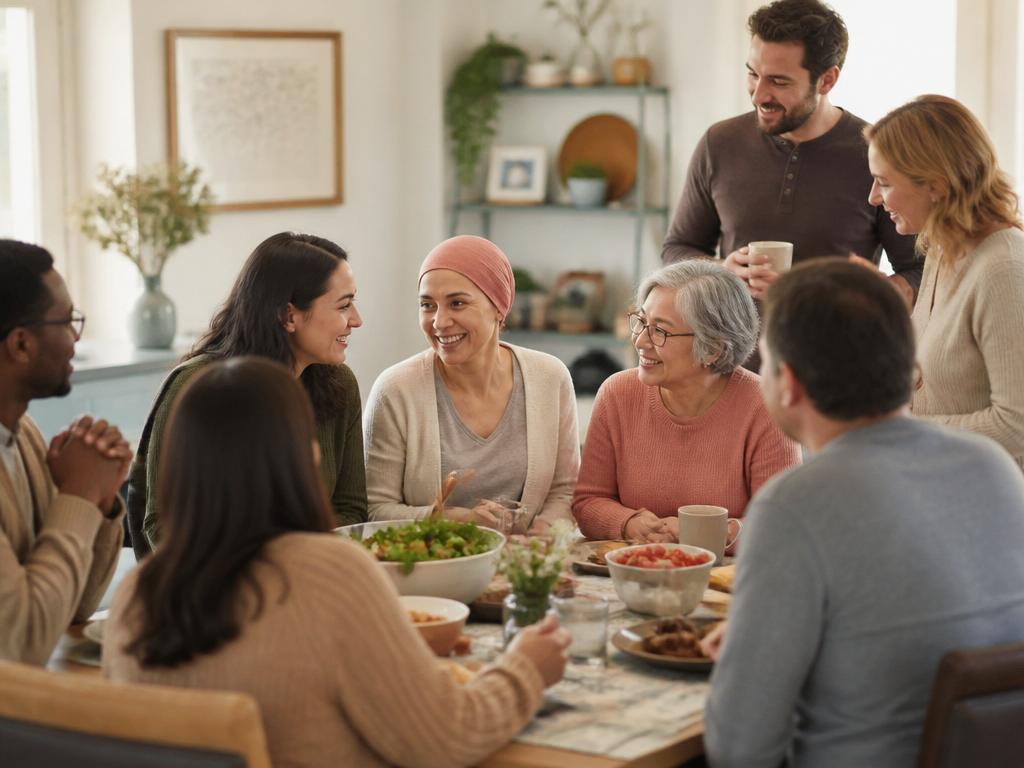
There is a specific loneliness that comes with a hard season — a sense that no one in your normal life quite gets it. Your friends are wonderful, and they try, but they haven't been where you are. A support group is one of the few places that closes that gap. It puts you in a room, or on a video call, with people who don't need you to explain the basics of what you're living through.
This guide is a starting map. It will walk you through the main kinds of groups, how to find them near you (or online), what to expect when you show up, and how to know if a group is the right one — or if you should keep looking.
The main kinds of support groups
Peer-led groups
Run by people who have been through the same experience — a widow leading a widow's group, a caregiver leading a caregiver group. Peer groups are warm, low-cost or free, and long-lasting. They're not therapy; they're companionship. Best for: shared experience, ongoing community, feeling less alone.
Clinician-led groups
Run by a licensed therapist or social worker, often through a hospital, hospice, cancer center, or community mental health agency. Structured, sometimes time-limited (6–12 weeks), and often free or covered by insurance. Best for: recent, acute loss or diagnosis; when you need more than companionship; when you want a professional in the room.
Faith-based groups
Run by churches, synagogues, temples, and other faith communities. Often free, warm, and grounded in a shared spiritual framework (GriefShare, Stephen Ministries, and many congregation-specific groups). Best for: people who want prayer, scripture, or spiritual community as part of the healing.
Online and hybrid groups
Video, phone, or forum-based. A lifesaver for rural families, homebound caregivers, rare-disease families, and anyone whose season doesn't leave time for in-person. Many of the national organizations below run robust online groups. Best for: geographic isolation, unpredictable schedules, or when you're just not ready to be in a room yet.
Where to actually look
- Your hospital or hospice social worker. This is the fastest, most underused route. Every hospital system has a bereavement or caregiver support coordinator who can hand you a list on the spot.
- The condition-specific national orgs. American Cancer Society, ALS Association, Alzheimer's Association, National Alliance for Caregiving, Compassionate Friends (child loss), Modern Widows Club, GriefShare — each maintains free searchable directories.
- Your local Area Agency on Aging (eldercare.acl.gov in the U.S.). Every county has one; they know every free caregiver resource in the region.
- Your county mental health department or 211. Dial 211 in the U.S. and Canada for a person who will help you find local free groups by phone.
- Your faith community. Ask the pastor, chaplain, or care ministry lead — they almost always know both the in-house groups and the ones in town.
- Your primary care doctor or your therapist. Even a short 'do you know a caregiver group in the area?' can surface an option you'd never find on your own.
What to expect the first time
It's normal to be nervous. Most groups follow a similar pattern: introductions (first name only, and only what you want to share), a topic or reading, open sharing, and a close. You can attend without saying anything the entire first meeting — that's a legitimate way to attend. Nobody will call on you.
- Arrive five minutes early; leave when the meeting ends. Don't stay for one-on-one talk your first time.
- You do not have to share your last name, your loved one's name, or your diagnosis.
- Your job is not to be helpful to others yet. It's just to be there.
- Try three meetings before you decide if a group is right for you. First meetings almost always feel awkward.
Signs it's a good fit — or not
Good signs
- You leave feeling less alone, even if you leave sad.
- The facilitator gently keeps people from monopolizing the room.
- Confidentiality is stated out loud. What's shared here, stays here.
- People with different experiences of the same loss are welcomed.
- Advice is not given unless asked for.
Warning signs
- One person dominates every meeting and nobody redirects it.
- Anyone is proselytizing (spiritual or otherwise) in a way that excludes people.
- Someone is selling something — a product, a program, a coach's services.
- You leave feeling worse, week after week, with no upside.
- The facilitator crosses into personal therapy territory without a license to do so.
"You don't have to earn the right to walk in. Being tired counts. Being confused counts. Just showing up counts."
National organizations to start with
- Family Caregiver Alliance (caregiver.org) — caregiver-specific, national directory
- AARP Family Caregiving (aarp.org/caregiving) — resources and local group finders
- American Cancer Society (cancer.org) — patient and family groups by cancer type
- Alzheimer's Association (alz.org) — 24/7 helpline and local support groups
- Compassionate Friends (compassionatefriends.org) — for families after the death of a child
- Modern Widows Club (modernwidowsclub.org) — chapters for widows of any age
- GriefShare (griefshare.org) — faith-based grief support groups nationally
- 988 Suicide & Crisis Lifeline (call or text 988 in the U.S.) — for any mental health crisis
Groups care for you. A Rally cares for your calendar. You need both.
Start a Rally for free. Invite your people. Let care happen.
For related reading, our <a href='/blog/caregivers-guide-to-rest' class='text-coral-600 underline'>caregiver's guide to rest</a> and <a href='/blog/how-to-accept-help-gracefully' class='text-coral-600 underline'>how to accept help gracefully</a> pair well with the work of showing up for a group.
Frequently asked questions
- Are support groups free?
- Most peer-led and faith-based groups are free. Hospital and hospice-run groups are usually free or covered by insurance. Private clinician-led groups may cost per session; ask your insurance about outpatient behavioral-health group therapy benefits.
- How do I find a support group near me?
- Start with your hospital or hospice social worker, call 211, or search the condition-specific national organization's directory. Your primary care doctor or therapist can usually name one or two local options as well.
- Are online support groups as effective as in-person ones?
- For most people, yes — research shows outcomes are comparable, and online groups can be more accessible for caregivers, rural families, and people who are homebound. If you're new to groups, an online one is often an easier first step.
- How long should I stay in a support group?
- As long as it's helping. Some people stay a season; others stay years, then eventually become the person who welcomes newcomers. Give any group three meetings before deciding, and give yourself full permission to move on when it's time.
About the author
The Rally Around You Team
We build gentle tools that help families, friends, and communities show up for one another during life's hardest and most tender seasons.
Published March 10, 2026 · Last updated April 30, 2026